All 100 Japanese N5 Kanji You Must Know to Pass the JLPT N5 読。書。聞。話。。。Are you familiar with those kanji yet? Some of the JLPT N5 kanji are these. It’s time to commit them to memory if you plan to take the test!
“JLPT” is an acronym for the Japanese Language Proficiency Test, in case you were unaware. With five proficiency levels, it’s one of the most well-known and respected assessments of Japanese language competency worldwide. The hardest level, N1, is regarded as nearly fluid. The easiest level, N5, covers the fundamentals of Japanese.
The JLPT is an excellent tool to gauge your proficiency in Japanese and test your abilities. Here is a resource to help you master the required JLPT N5.
Table of contents Expectations for the JLPT N5 Exam Why the JLPT N5 Test Requires Knowledge of Kanji The N5 Kanji List in Japanese The JLPT N5: The 100 Kanji You Must Know Numbers in Japanese Kanji Time in Japanese Kanji Kanji for People and Things in Japanese Places and Directions in Japanese Kanji Japanese Verbs in Kanji Japanese Adjectives in Kanji The Greatest Methods for Memorizing Japanese Kanji A Concluding Note on Studying Japanese Kanji The following post delves deeply into the subject; but, if you would like a brief synopsis, here is a video I created:
Expectations for the JLPT N5 Exam Despite being the most fundamental official Japanese test, the JLPT N5 is nonetheless .
You must be able to read Japanese at a basic level and comprehend simple discussions from everyday life and school in order to pass the JLPT N5 exam. You ought to be familiar with about 800 words.
I suggest beginning with roughly 50 fundamental language patterns and the Core 101 Japanese terms.
JTest4U and Genki I are my two favorite options for grammar study at this level. Additionally, you must be completely at ease reading all of the hiragana and katakana characters.
Why the JLPT N5 Test Requires Knowledge of Kanji Among the most difficult things to do when learning Japanese? Kanji.
The JLPT requires you to know roughly 100 kanji at the N5 level in order to pass. Between examinations, these kanji may vary somewhat, however you can.
You can anticipate seeing the 100 most often used kanji for verbs, numbers, time, locations, people, simple adjectives, and directions, however these may vary slightly from test to test.
The good news? Because these kanji are so often used, you will see them again in both the texts you read and the vocabulary you acquire. The bad news is that since most of these kanji are radicals, or roots, you will have to memorize them on your own. In Japanese, radicals are simple kanji, which serve as the foundation for complicated kanji.
Therefore, it gets easier to interpret more difficult kanji the more radicals you learn. The most common way to memorize kanji is to start with the radicals and work your way up to complex kanji.
1-10 (About Numbers )
Kanji
English Meaning
Onyomi
Onyomi (Hiragana)
Kunyomi
Kunyomi (Hiragana)
JLPT N5 Vocab with Kanji
JLPT N5 Vocab with Kanji (Hiragana)
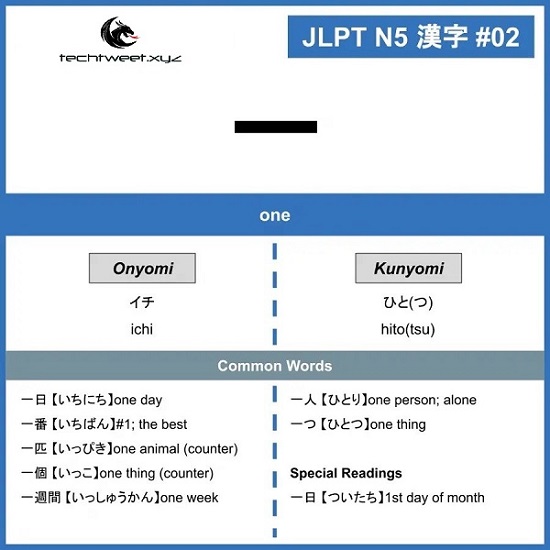
一
One
ichi, itsu
いち , いつ
hito(tsu), hito
ひと
一人 (one person, alone)
一人 (いちにん, ichinin) means “one person” in Japanese
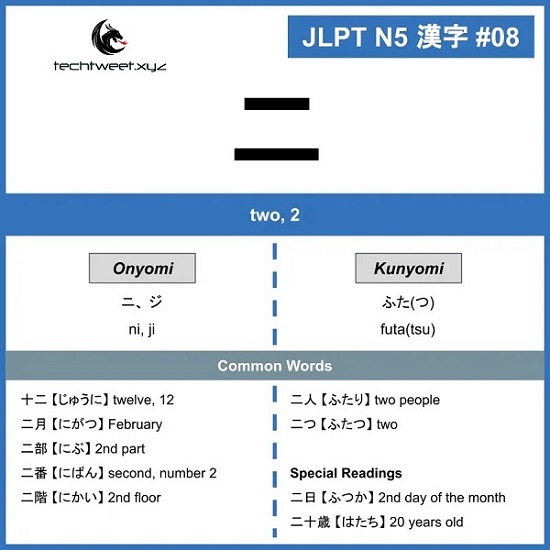
二
Two
ni
に
futa(tsu), futa
ふた
二人 (two people, pair)
二人 (ににん, ninin) means “two people” in Japanese
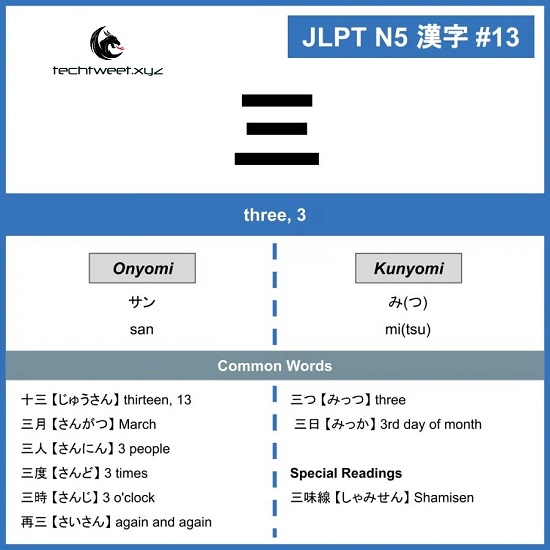
三
Three
san
さん
mit(tsu), mi
みっつ, み
三日 (3rd day of the month)
三日 (みっか, mikka) means “three days” in Japanese
四
Four
shi
し
yo(tsu), yo, yon
つ
四日 (4th day of the month)
四日 (よっか, yokka) means “four days“in Japanese
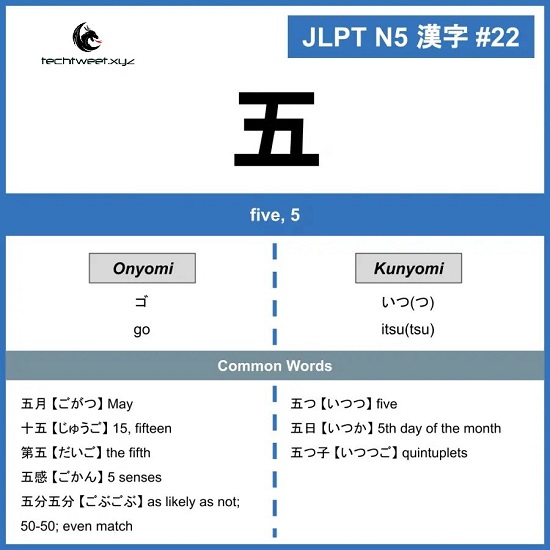
五
Five
go
ご
itsu
いつ
五日 (5th day of the month)
五日 (いつか, itsuka) means “five days“days“ in Japanese
Kanji
English Meaning
Onyomi
Onyomi (Hiragana)
Kunyomi
Kunyomi (Hiragana)
JLPT N5 Vocab with Kanji
JLPT N5 Vocab with Kanji (Hiragana)
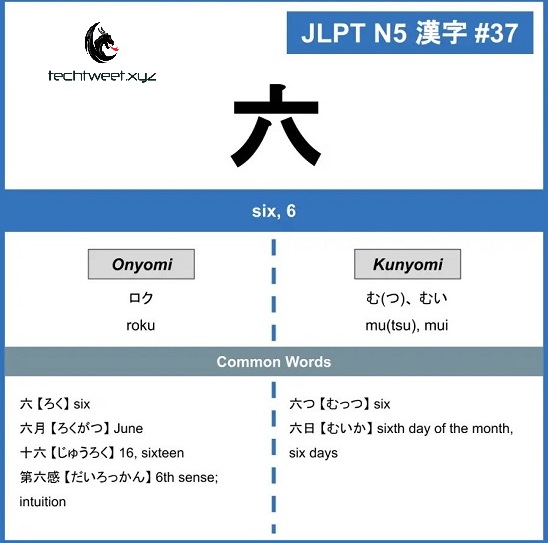
六
Six
roku
ろく
mut(tsu), mu
むつ
六日 (6th day of the month)
六日 (むいか, muika) means “six days“in Japanese
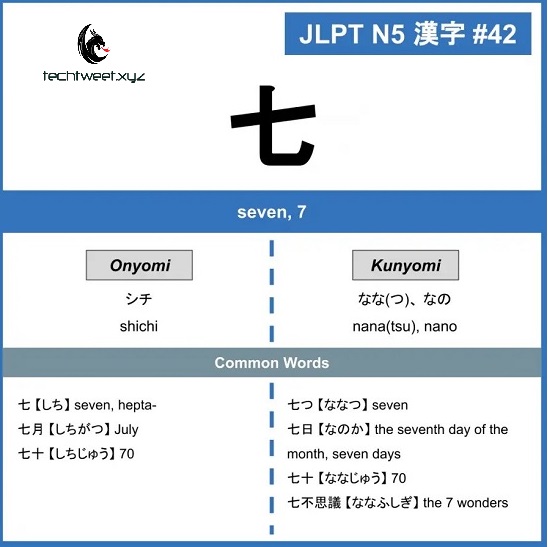
七
Seven
shichi
しち
nana(tsu), nana
なな
七日 (7th day of the month)
七日” (しちにちshichinichi) in Japanese literally means “seven days.”
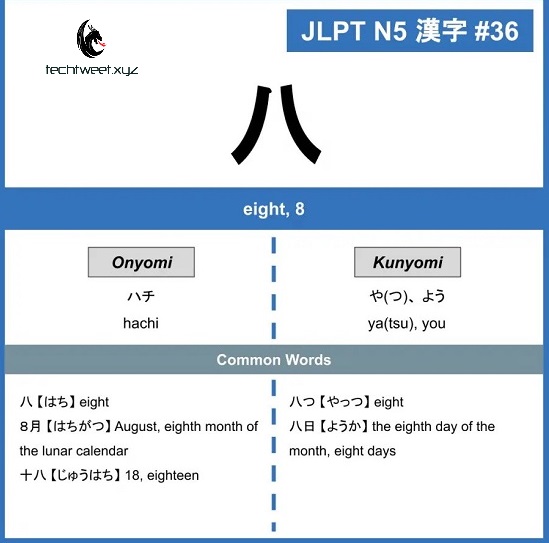
八
Eight
hachi
はち
yat(tsu), ya
やっと
八日 (8th day of the month)
八日” (ようか, youka) means “eighth day” in Japanese.
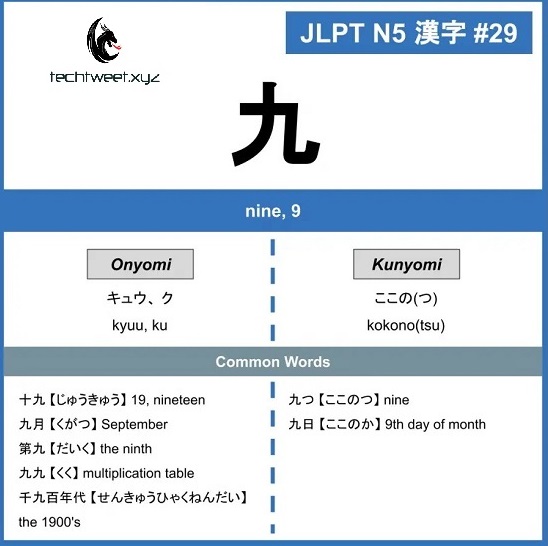
九
Nine
kyuu, ku
きゅう
kokono(tsu), kokono
ここの
九日 (9th day of the month)
“九日” (ここのか, kokonoka) means “ninth day” in Japanese.
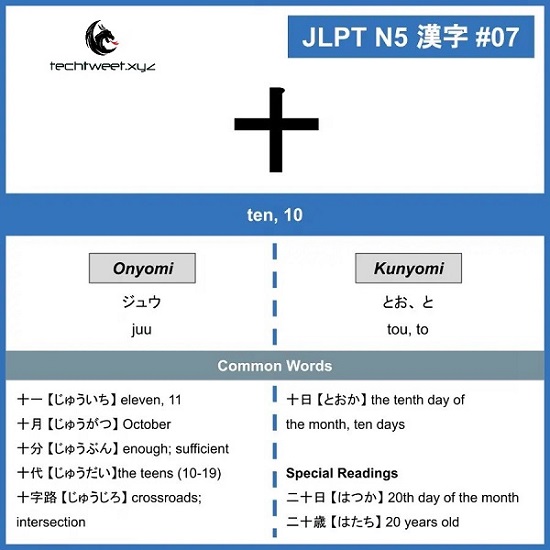
十
Ten
juu, ji
じゅう
tou, to
とう
十日 (10th day of the month)
“十日” (とおか, tooka) means “tenth day” in Japanese.
百
Hundred
hyaku
ひゃく
—
—
百万円 (1 million Yen)
“百万円” (ひゃくまんえん, hyakuman en) means “one million yen” in Japanese.
Kanji
English Meaning
Onyomi
Onyomi (Hiragana)
Kunyomi
Kunyomi (Hiragana)
JLPT N5 Vocab with Kanji
JLPT N5 Vocab with Kanji (Hiragana)
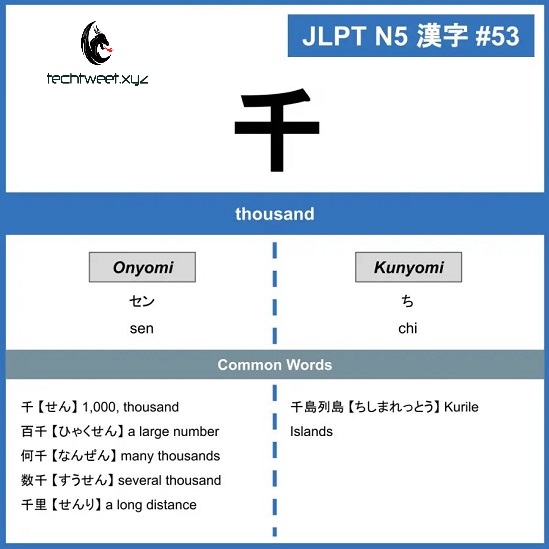
千
Thousand
sen
せん
chi
ち
千万円 (10 million Yen)
“千万円” (せんまんえん, senman en) means “ten million yen” in Japanese.
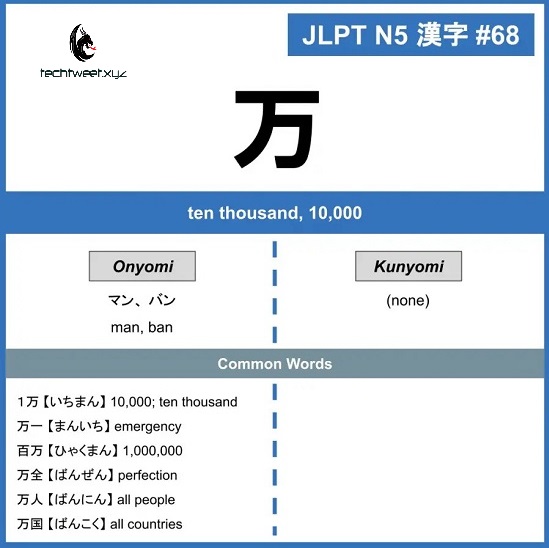
万
Ten thousand
man, ban
まん, ばん
–
–
万年筆 (fountain pen)
“万年筆” (まんねんひつ, mannenhitsu) means ” Fountain pen” in Japanese.
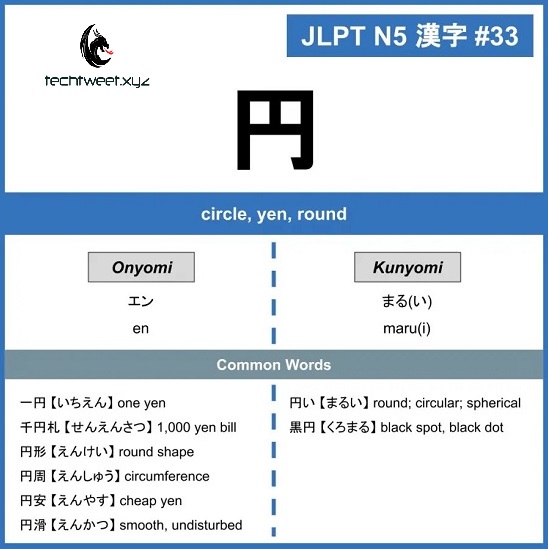
円
Yen, circle, and round
en
えん
maru(i)
まるい
円い (round)
円い” (えんい, en’i) means “round” or “circular” in Japanese.
Kanji
English Meaning
Onyomi
Onyomi (Hiragana)
Kunyomi
Kunyomi (Hiragana)
JLPT N5 Vocab with Kanji
JLPT N5 Vocab with Kanji (Hiragana)
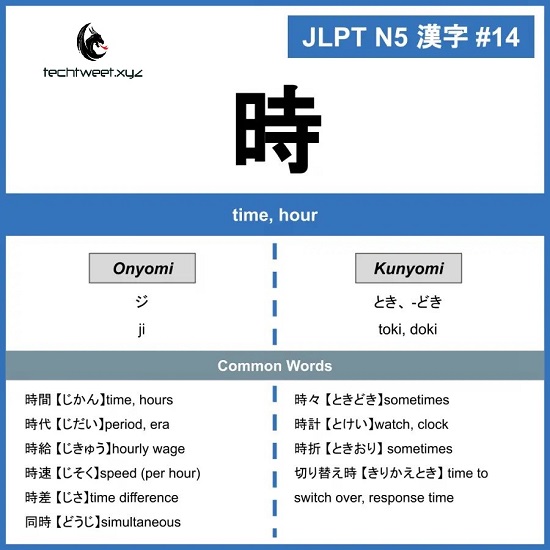
時
Time, hour
ji
じ
toki
とき
時計 (clock, watch)
he word 時計 (どけい, dokei) means “clock” or “watch.”
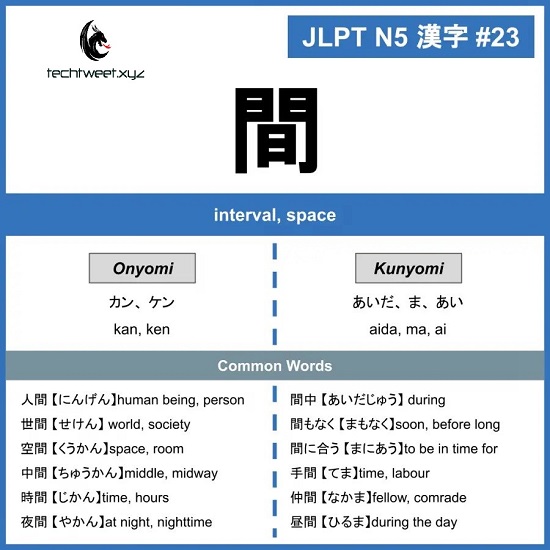
間
Time frame, span of time
kan, ken
かん, けん
aida
あいだ
時間 (time, hours)
The word 時間 (じかん, jikan) means “time” or “hours” in Japanese.
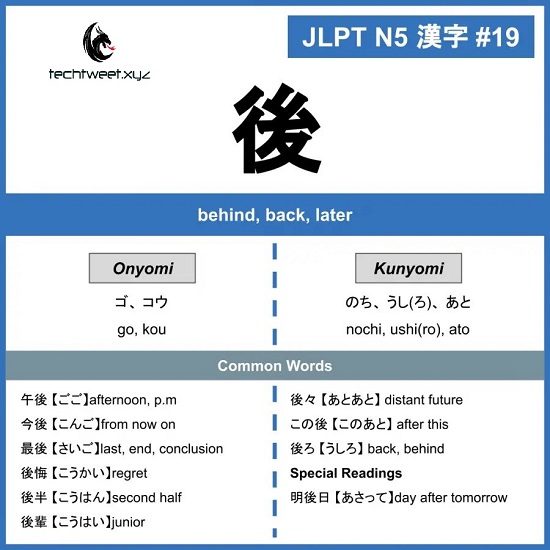
後
After, later, behind
go, kou
ご, こう
ato
あと
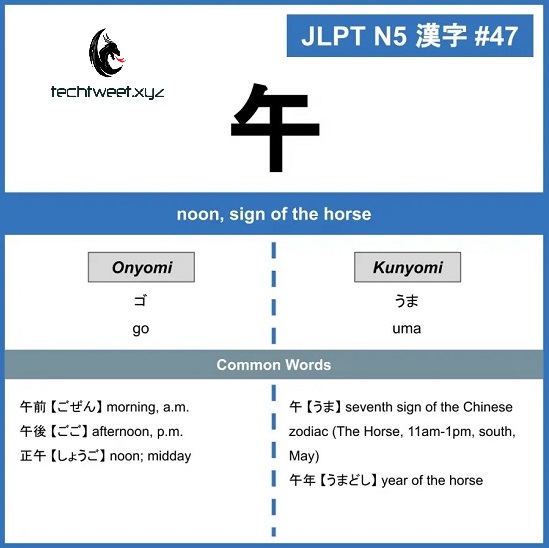
午後 (afternoon, P.M.)
The word 午後 (ごご, gogo) means “afternoon” or “P.M.” in Japanese.
Kanji
English Meaning
Onyomi
Onyomi (Hiragana)
Kunyomi
Kunyomi (Hiragana)
JLPT N5 Vocab with Kanji
JLPT N5 Vocab with Kanji (Hiragana)
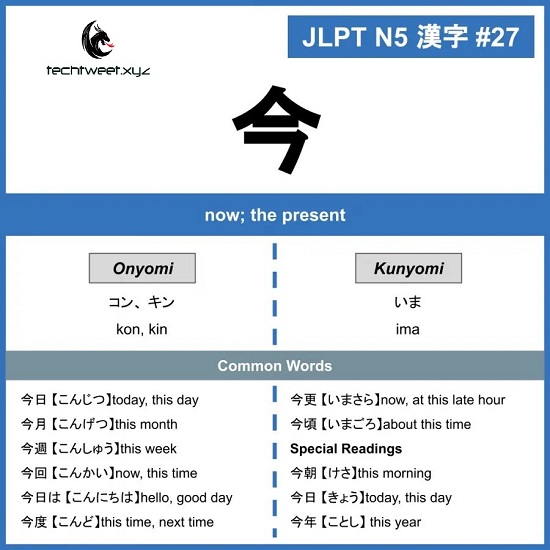
今
Now
kon, kin
こん, きん
ima
いま
今晩 (this evening), 今朝 (this morning)
今晩 (こんばん, konban) means “this evening” or “tonight.”今朝 (けさ, kesa) means “this morning.”
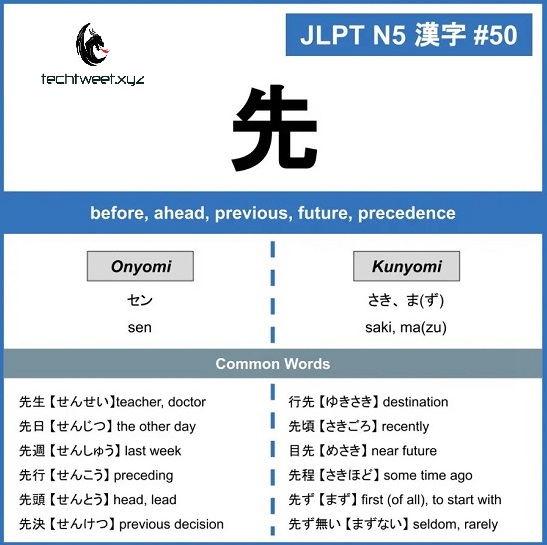
先
Before, ahead, future
sen
せん
saki
さき
先週 (last week), 先生 (teacher, master)
先週 (せんしゅう, senshū) means “last week.”先生 (せんせい, sensei) means “teacher” or “master.”
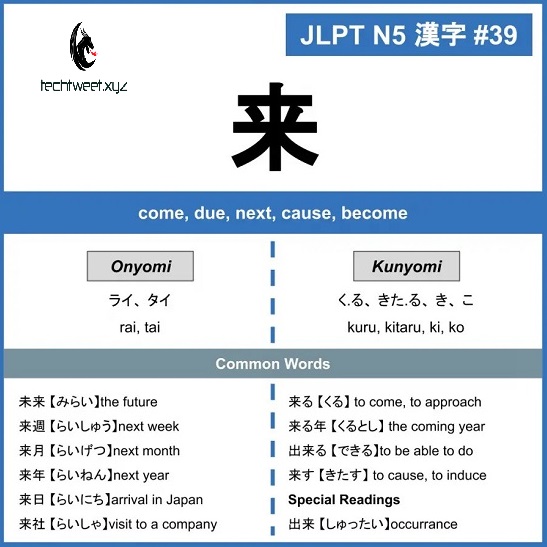
来
To come
rai
らい
ku(ru)
く
来月 (next month), 来る (to come)
来月 (らいげつ, raigetsu) means “next month.”来る (くる, kuru) means “to come.”
Kanji
English Meaning
Onyomi
Onyomi (Hiragana)
Kunyomi
Kunyomi (Hiragana)
JLPT N5 Vocab with Kanji
JLPT N5 Vocab with Kanji (Hiragana)
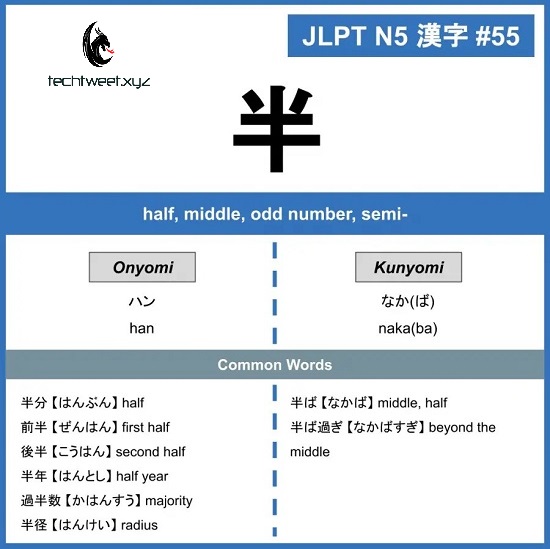
半
Half, middle
han
はん
naka(ba)
なかば
半分 (half)
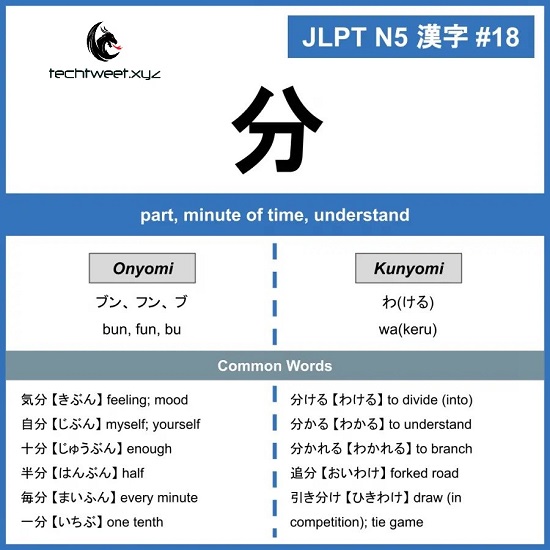
Yes! 半分 (はんぶん, hanbun) means “half.” It combines the kanji 半 (han), meaning “half,” with 分 (bun), which relates to “part” or “portion.” If
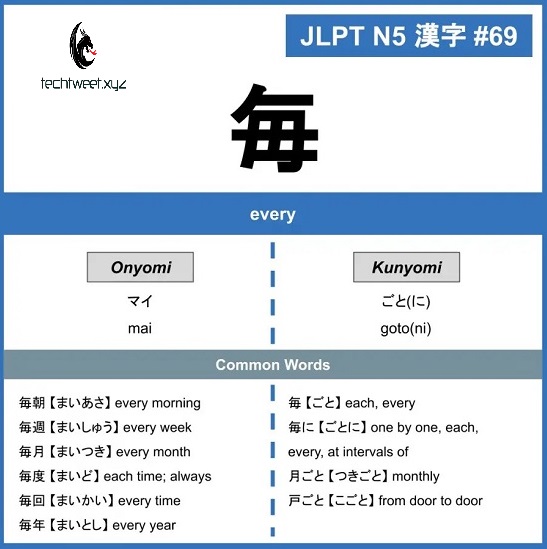
毎
Every, each
mai
まい
毎日(every day)
Exactly! 毎日 (まいにち, mainichi) means “every day.”
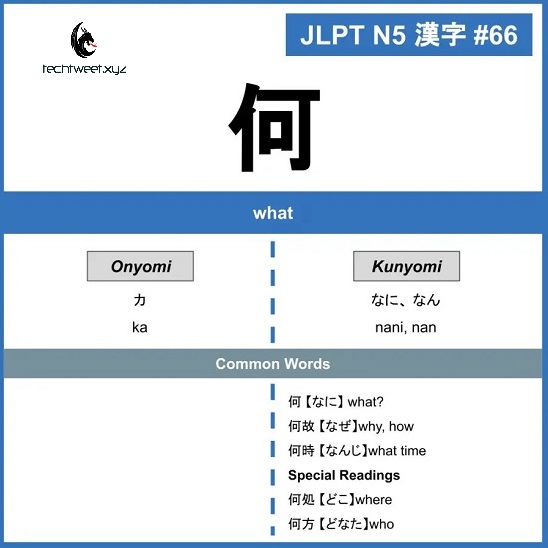
何
What, which, how many
ka
か
nan, nani
なん, なに
何曜日 (what day of the week)
Yes! 何曜日 (なんようび, nan’yōbi) means “what day of the week?” It’s a useful phrase for asking about specific days.
Kanji
English Meaning
Onyomi
Onyomi (Hiragana)
Kunyomi
Kunyomi (Hiragana)
JLPT N5 Vocab with Kanji
JLPT N5 Vocab with Kanji (Hiragana)
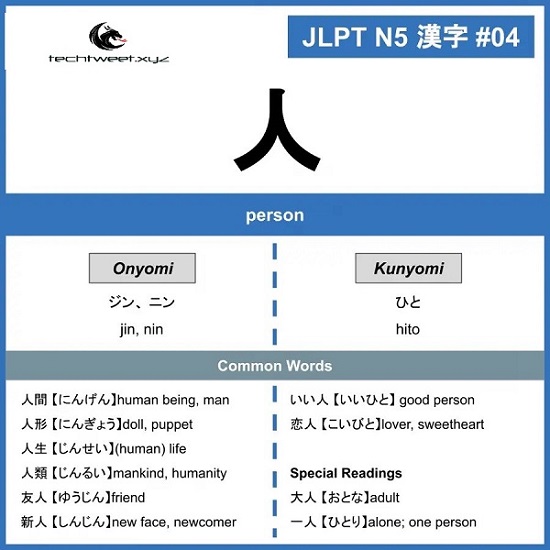
人
Person
jin, nin
じん, にん
hito
ひと
人々 (people)
“人々” (ひとびと, hitobito) in Japanese means “people” or “human beings”
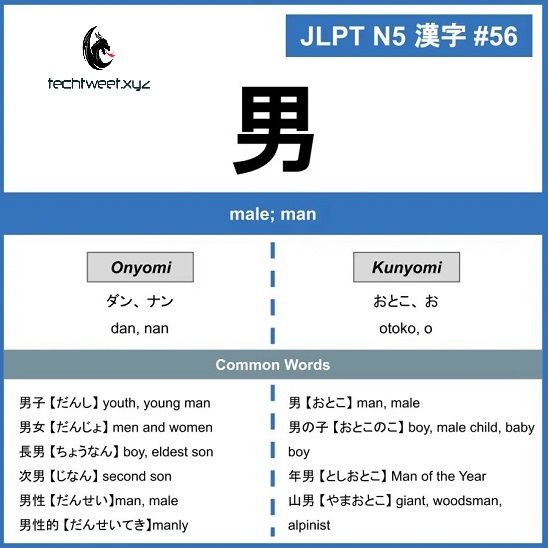
男
Man, boy, male
dan, nan
だん, なん
otoko
おとこ
男の子 (boy)
“男の子” (おとこのこ, otoko no ko) means “boy” or “male child” in Japanese.
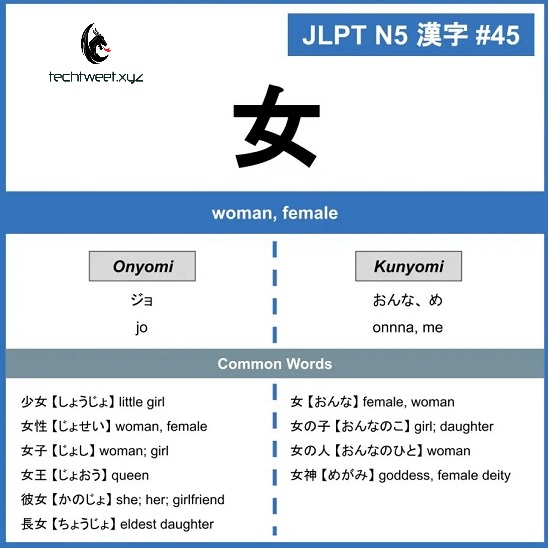
女
Woman, girl, female
jo, nyo
じょ, にょ
onna, me
おんな, め
女の子 (girl)
“女の子” (おんなのこ, onna no ko) means “girl” or “female child.”
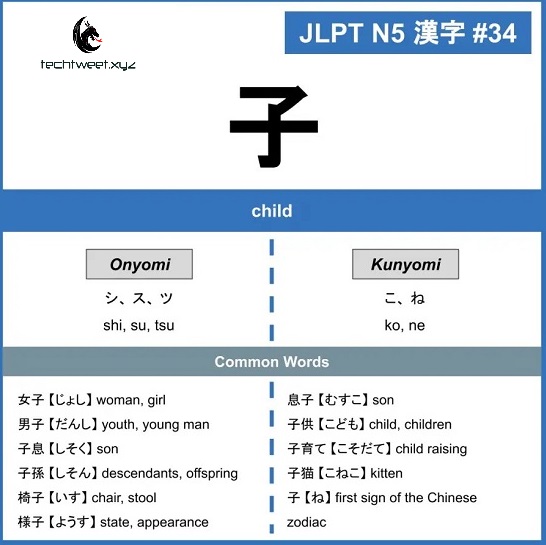
子
Child
shi, su
し, す
ko
こ
子供 (child)
“子供” (こども, kodomo) means “child” or “children”
Kanji
English Meaning
Onyomi
Onyomi (Hiragana)
Kunyomi
Kunyomi (Hiragana)
JLPT N5 Vocab with Kanji
JLPT N5 Vocab with Kanji (Hiragana)
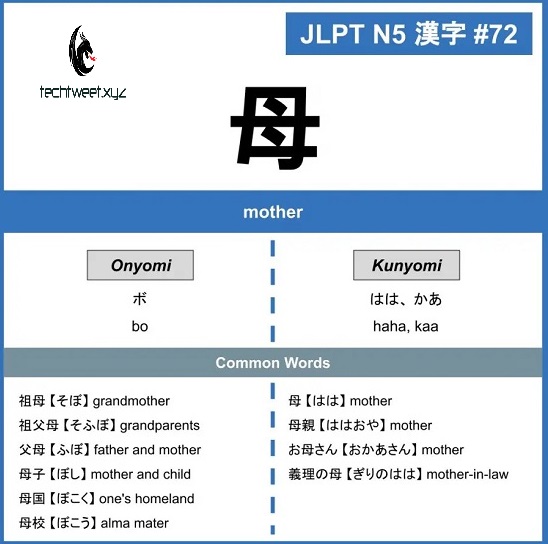
母
Mother
bo
ぼ
haha
はは
母 (mother)
“母” (はは, haha) means “mother”
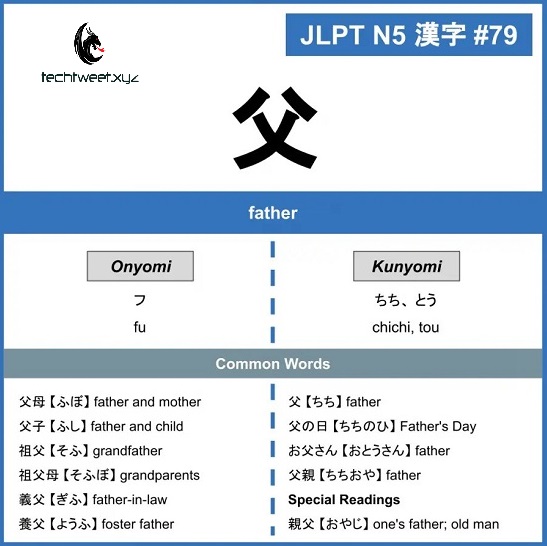
父
Father
fu
ふ
chichi
ちち
父 (father)
父” (ちち, chichi) means “father”
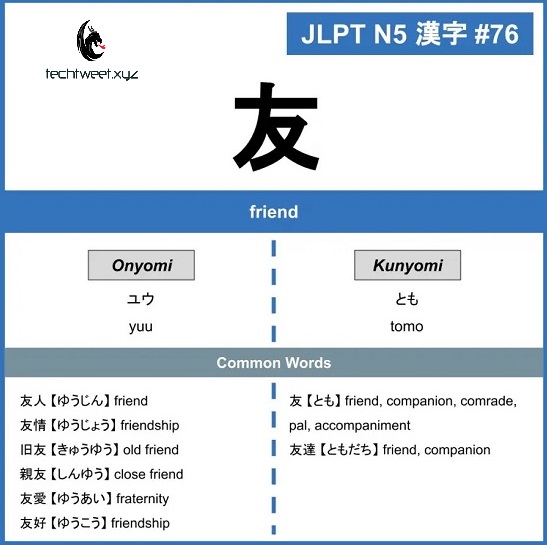
友
Friend
yuu
ゆう
tomo
とも
友達 (friend)
“友達” (ともだち, tomodachi) means “friend” or “friends
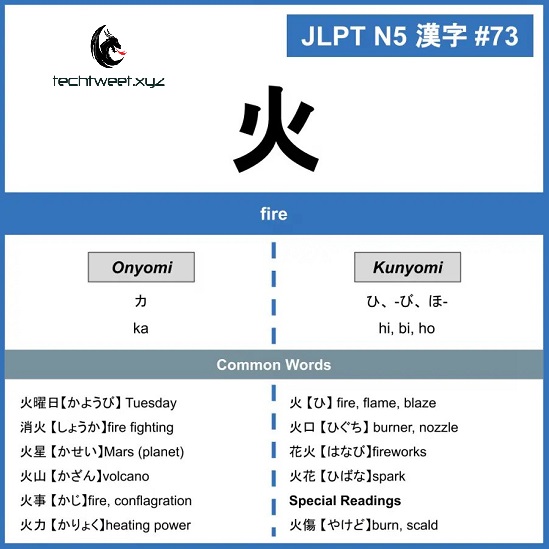
火
Fire
ka
か
hi
ひ
火曜日 (Tuesday)
火曜日 (かようび, kayoubi) means Tuesday
Kanji
English Meaning
Onyomi
Onyomi (Hiragana)
Kunyomi
Kunyomi (Hiragana)
JLPT N5 Vocab with Kanji
JLPT N5 Vocab with Kanji (Hiragana)
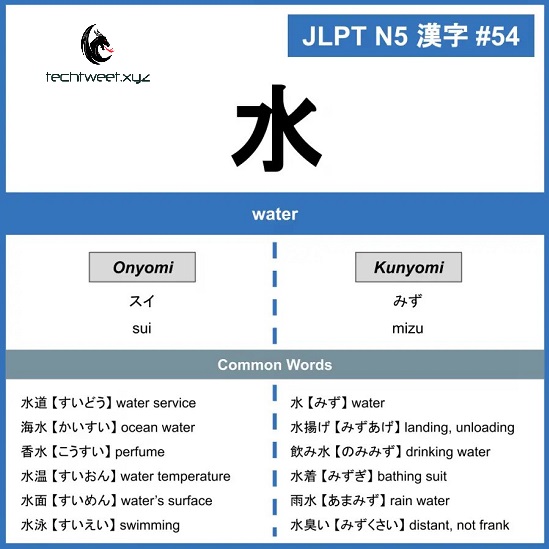
水
Water
sui
すい
mizu
みず
水曜日 (Wednesday)
水曜日 (すいようび, suiyōbi) means “Wednesday” in Japanese.
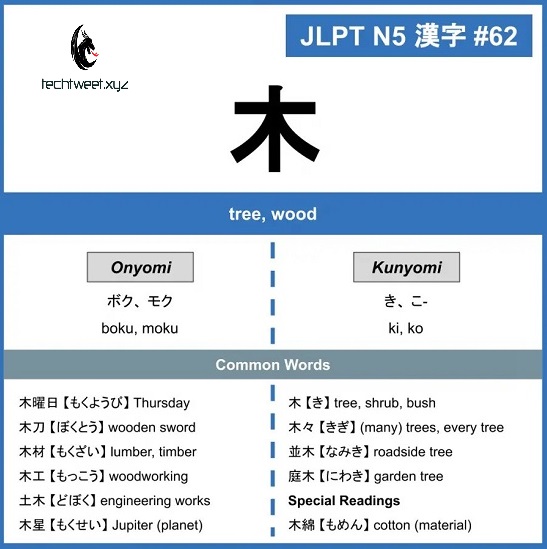
木
Tree, wood
moku, boku
もく,ぼく
ki, ko
き, こ
木曜日 (Thursday)
木曜日 (もくようび, mokuyōbi) means “Thursday” in Japanese.
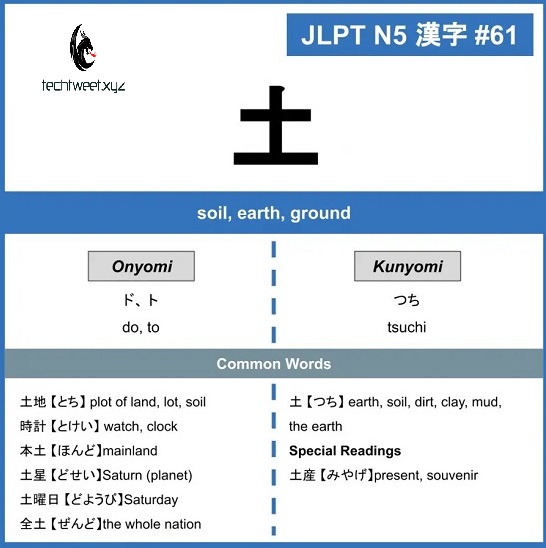
土
Earth, ground
do, to
ど, と
tsuchi
つち
土曜日 (Saturday)
土曜日 (どようび, doyōbi) means Saturday in Japanese.
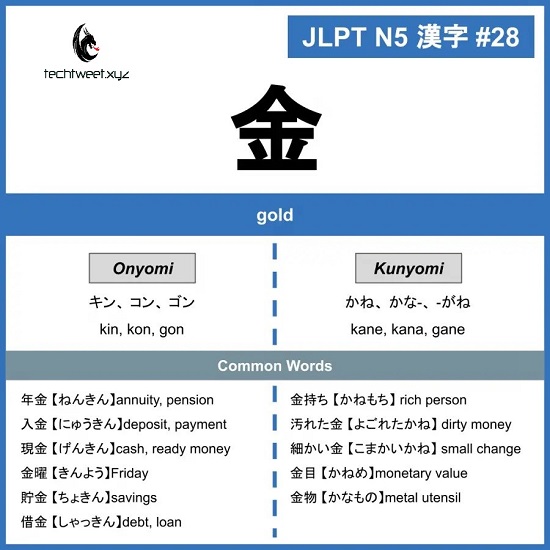
金
Money, gold
kin, kon
きん, こん
kane
かね
金曜日 (Friday)
金曜日 (きんようび, kinyōbi) means Friday in Japanese.
Kanji
English Meaning
Onyomi
Onyomi (Hiragana)
Kunyomi
Kunyomi (Hiragana)
JLPT N5 Vocab with Kanji
JLPT N5 Vocab with Kanji (Hiragana)
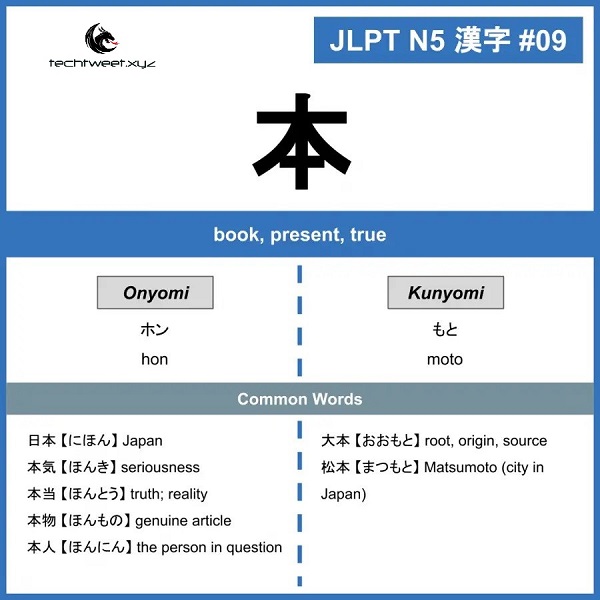
本
Book, source
hon
ほん
moto
もと
日本語 (Japanese)
日本語 (にほんご, nihongo) means Japanese language in English.
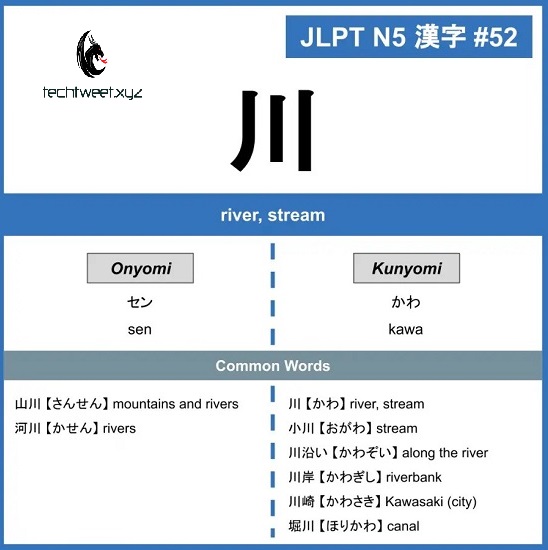
川
River
sen
せん
kawa
かわ
川 (river)
kanji 川 (かわ, kawa) means river.
花
Flower
ka
か
hana
はな
花火 (fireworks)
花火 (はなび, hanabi) means fireworks in Japanese.
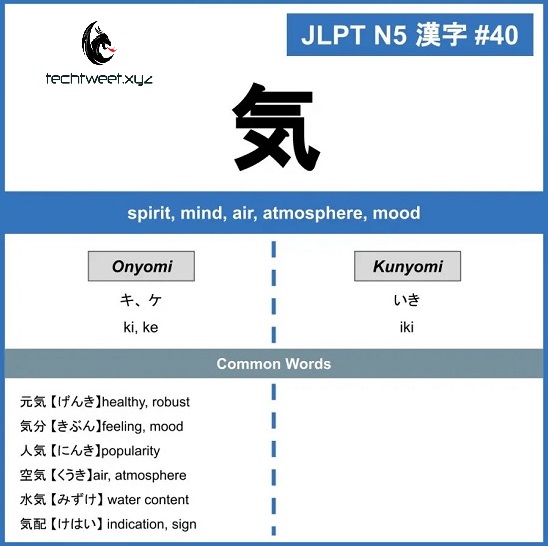
気
Spirit
ki, ke
き, け
–
–
元気 (healthy, spirit, fine)
元気 (げんき, genki) in Japanese can have several meanings
Kanji
English Meaning
Onyomi
Onyomi (Hiragana)
Kunyomi
Kunyomi (Hiragana)
JLPT N5 Vocab with Kanji
JLPT N5 Vocab with Kanji (Hiragana)
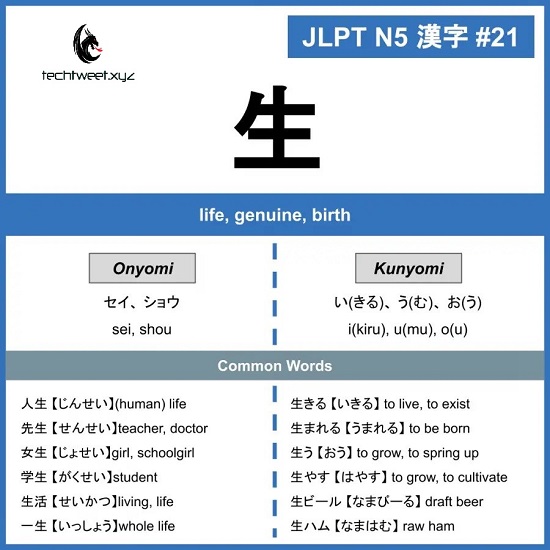
生
Life, to live, to be born, to grow
sei, shou
せい
i(kiru), u(mareru), ha(yasu)
いきる (ikiru) — to live, うまれる (umareru) — to be born, はやす (hayasu) — to hasten, to encourage
生徒 (pupil)
生徒 (せいと, seito) means pupil or student in Japanese
魚
Fish
gyo
ぎょう
sakana
さかな
魚 (fish)
The kanji 魚 (pronounced “さかな” in Japanese) means fish.
Kanji
English Meaning
Onyomi
Onyomi (Hiragana)
Kunyomi
Kunyomi (Hiragana)
JLPT N5 Vocab with Kanji
JLPT N5 Vocab with Kanji (Hiragana)
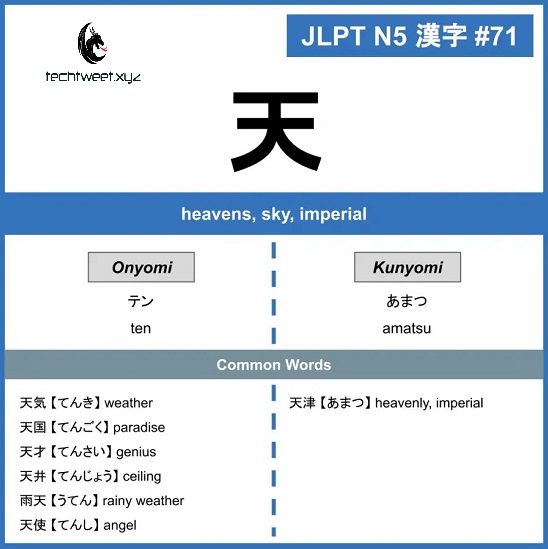
天
Heaven
ten
てん
ame, ama
あめ, あめ
天気 (weather)
天気 (てんき, tenki) means “weather” in Japanese.
空
Sky, empty
kuu
くう
sora, a(keru)
そら, あける
空 (sky)
The kanji 空 (そら / sora) means “sky” in Japanese
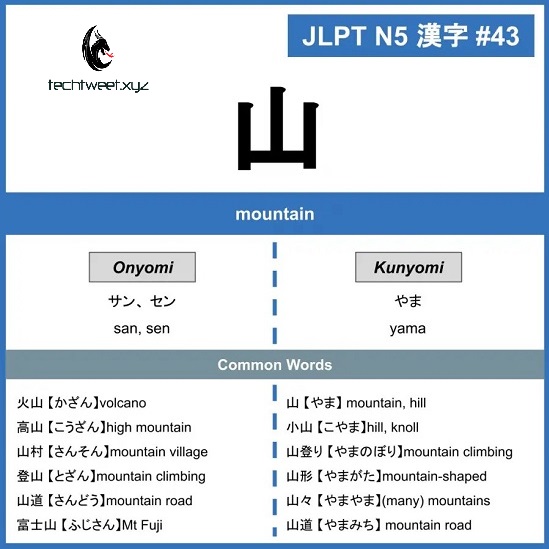
山
Mountain
san
さん
yama
やま
山 (mountain)
The kanji 山 (やま / yama) means “mountain” in Japanese.
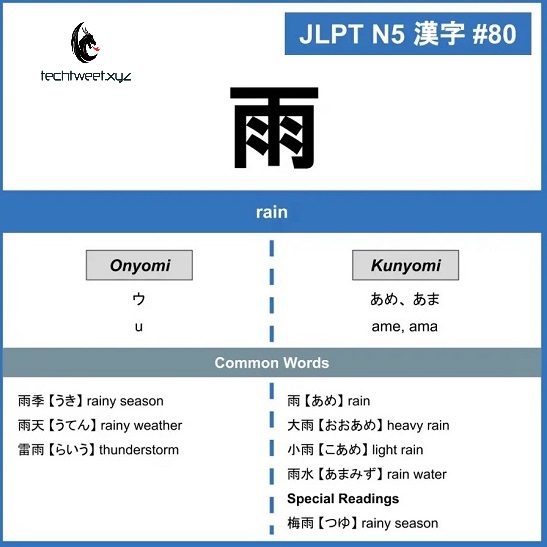
雨
Rain
u
う
ame
あめ
雨 (rain)
The kanji 雨 (あめ / ame) means “rain” in Japanese.
Kanji
English Meaning
Onyomi
Onyomi (Hiragana)
Kunyomi
Kunyomi (Hiragana)
JLPT N5 Vocab with Kanji
JLPT N5 Vocab with Kanji (Hiragana)
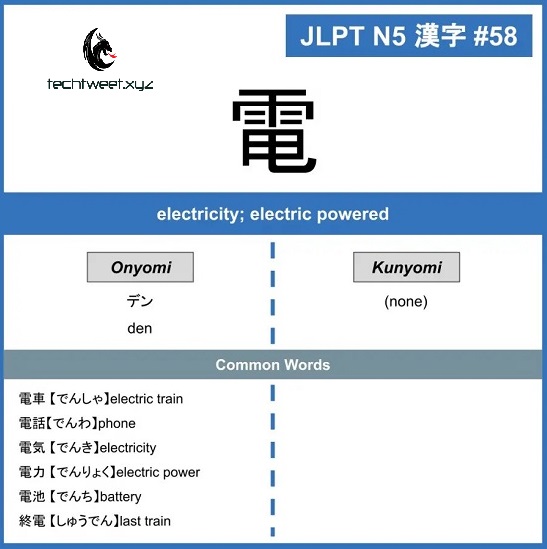
電
Electricity
den
でん
—
電気 (electricity)
The word 電気 (でんき / denki) means “electricity” or “electric power” in Japanese.
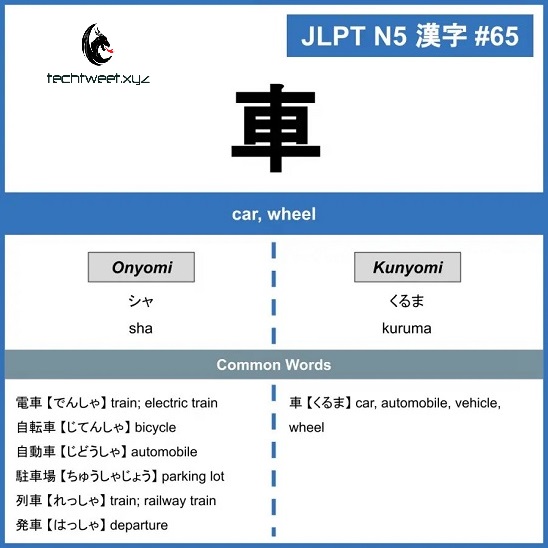
車
Car, vehicle
sha
しゃ
kuruma
くるま
電車 (electric train)
The word 電車 (でんしゃ / densha) means “electric train” in Japanese.
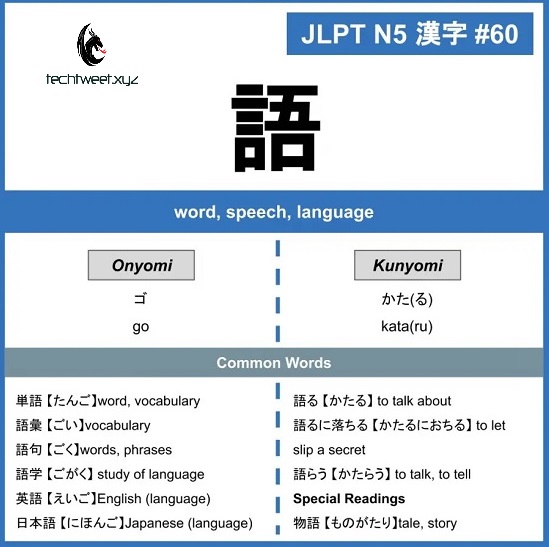
語
Language, word, to chat
go
ご
kata(ru)
かたる
英語 (English)
The kanji 英語 (pronounced “えいご” in Japanese) means English as a language.
耳
Ear
ji
じ
mimi
みみ
耳 (ear)
The kanji 耳 (pronounced “みみ” in Japanese) means ear.
Kanji
English Meaning
Onyomi
Onyomi (Hiragana)
Kunyomi
Kunyomi (Hiragana)
JLPT N5 Vocab with Kanji
JLPT N5 Vocab with Kanji (Hiragana)
手
Hand
shu
しゅ
te
て
手紙 (letter)
手紙 (てがみ, tegami) means “letter” in Japanese
足
Foot, to add
soku
そく
ashi, ta(su)
あし, たす
足 (foot)
足 (foot) in Kanji is pronounced as あし (ashi) in Hiragana.
目
Eye
moku
もく
me
め
目 (eye)
目 (meaning “eye”) is pronounced め (me) in Hiragana.
口
Mouth
kou, ku
こう, く
kuchi
くち
出口 (exit)
出口 (でぐち, deguchi) means “exit.
Kanji
English Meaning
Onyomi
Onyomi (Hiragana)
Kunyomi
Kunyomi (Hiragana)
JLPT N5 Vocab with Kanji
JLPT N5 Vocab with Kanji (Hiragana)
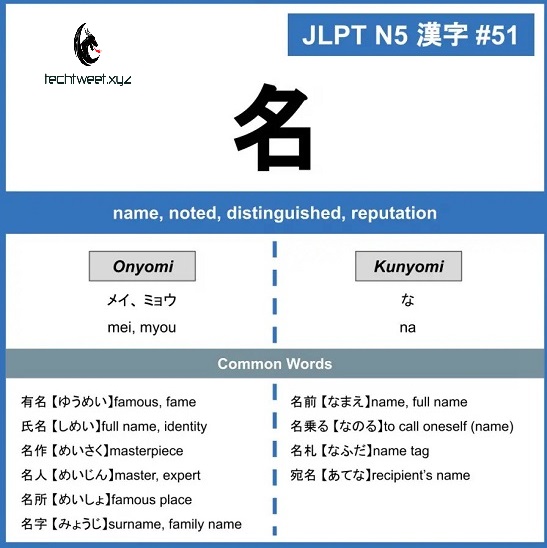
名
Name
mei, myou
めい , みょう
na
な
名前 (name)
名前 (なまえ, namae) means “name.”
店
Shop
ten
てん
mise
みせ
喫茶店 (coffee shop)
喫茶店 (きっさてん, kissaten) means “coffee shop” or “tea shop.”
駅
Station
eki
えき
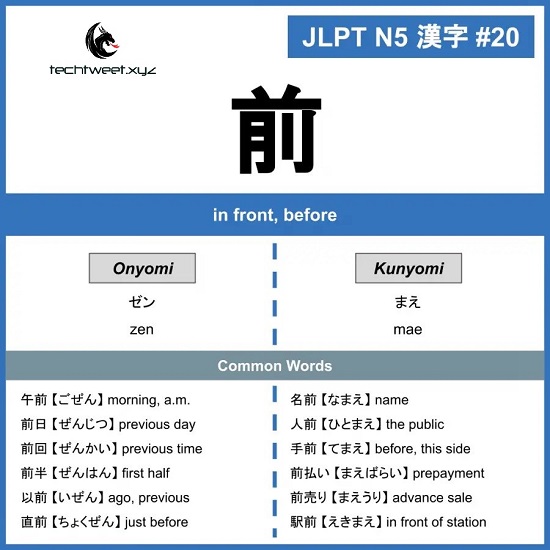
駅前 (in front of the station)
駅前 (えきまえ, ekimae) means “in front of the station” in Japanese.
道
Street, path, way
dou
どう
michi
みち
道具 (tool)
道具 (dougu) means “tool” in Japanese.
Kanji
English Meaning
Onyomi
Onyomi (Hiragana)
Kunyomi
Kunyomi (Hiragana)
JLPT N5 Vocab with Kanji
JLPT N5 Vocab with Kanji (Hiragana)
社
Shrine, society
sha
しゃ
yashiro
やしろ
社長 (president of a company)
社長 (shachou) means “company president” or “CEO” in Japanese.
国
Country
koku
こく
kuni
くに
外国人 (foreigner)
外国人 (gaikokujin) specifically means “foreigner” or “non-Japanese person” in Japanese.
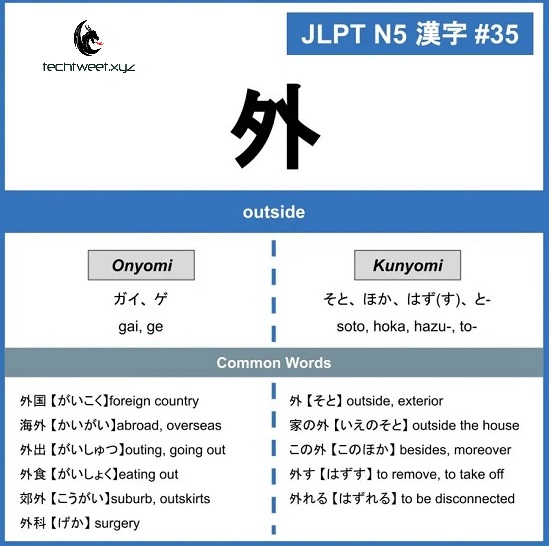
外
Outside
gai, ge
がい
soto, hazu(reru), hoka
そと, はず(れる), ほか
外国 (foreign country)
外国 (gaikoku) means foreign country.
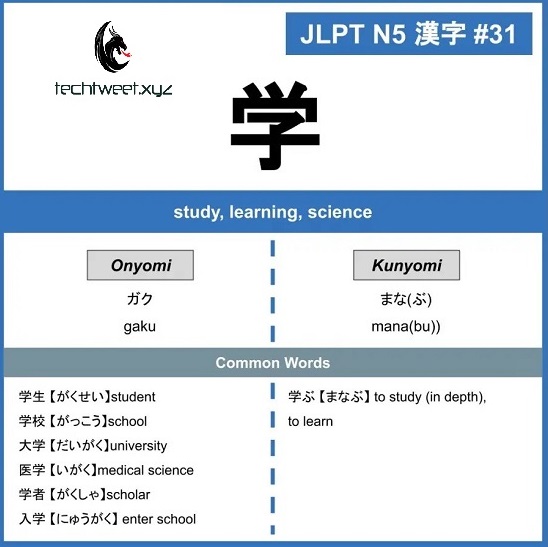
学
School, learning
gaku
がく
mana(bu)
まなぶ.
大学 (university)
大学 (daigaku) means university.
Kanji
English Meaning
Onyomi
Onyomi (Hiragana)
Kunyomi
Kunyomi (Hiragana)
JLPT N5 Vocab with Kanji
JLPT N5 Vocab with Kanji (Hiragana)
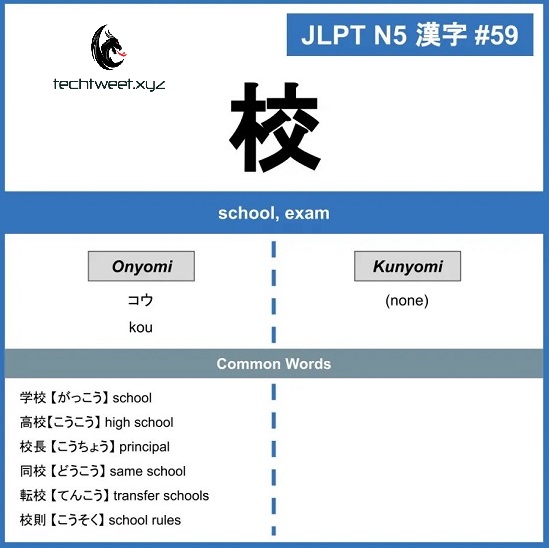
校
School
kou
こう
学校 (school)
学校 (gakkou) means school.
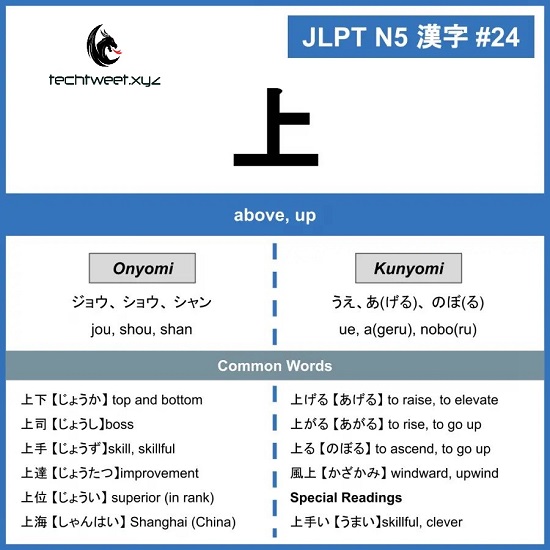
上
Up, above
shou, jou
しょう, じょう
ue, u, a(geru)
うえ, う, あげる
上着 (jacket)
上着 (uwagi) means jacket or coat.
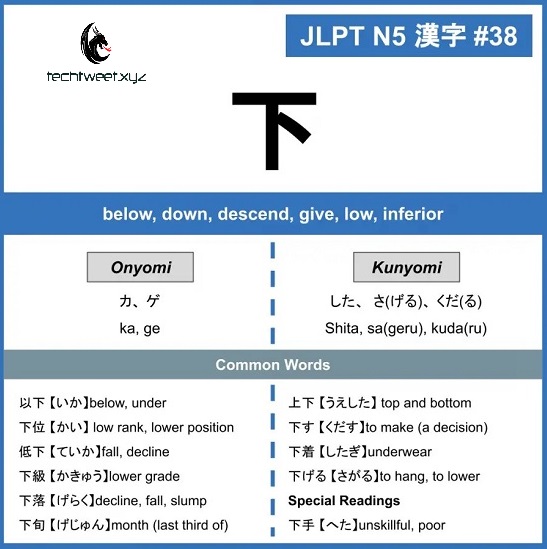
下
Down, below
ka, ge
か , が
ku(daru), shita
く , した
靴下 (socks)
靴下 (くつした, kutsushita) means “socks” in Japanese.
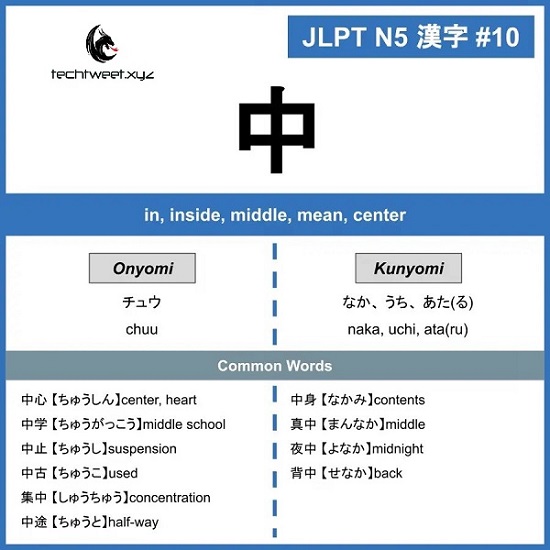
中
Middle, center, inner, between
chuu
ちゅう
naka
なか
日中 (during the day, midday)
日中 (にっちゅう, nicchuu) means “during the day” or “midday” in Japanese.
Kanji
English Meaning
Onyomi
Onyomi (Hiragana)
Kunyomi
Kunyomi (Hiragana)
JLPT N5 Vocab with Kanji
JLPT N5 Vocab with Kanji (Hiragana)
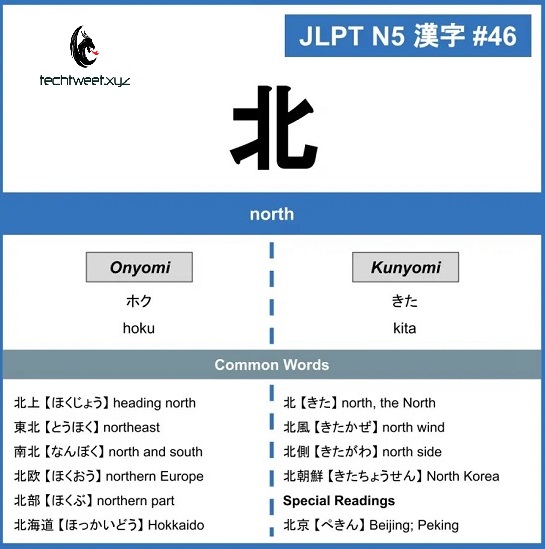
北
North
hoku
ほく
kita
きた
北 (north)
北 (きた, kita) means “north” in Japanese.
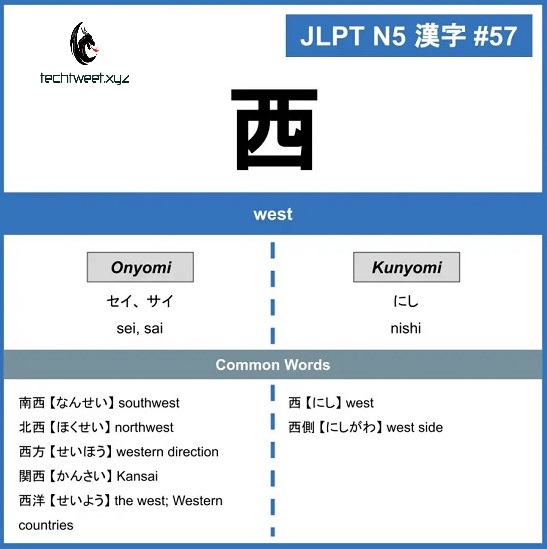
西
West
sai, sei
さい, せい
nishi
にし
西 (west)
西 (にし, nishi) means “west” in Japanese.
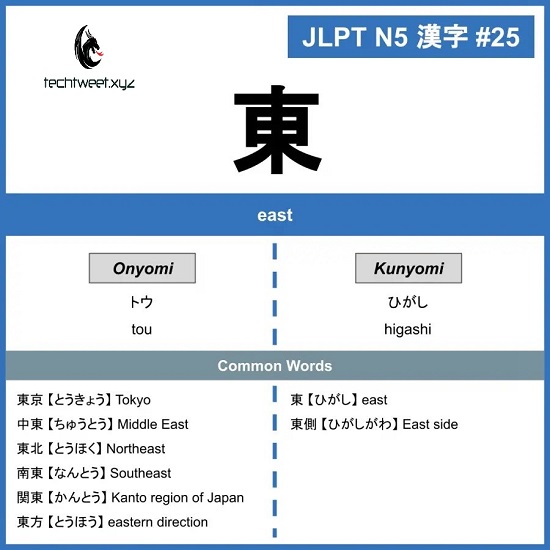
東
East
tou
とう
higashi
ひがし
東京 (Tokyo)
東京 (とうきょう, Tōkyō) is the capital city of Japan.
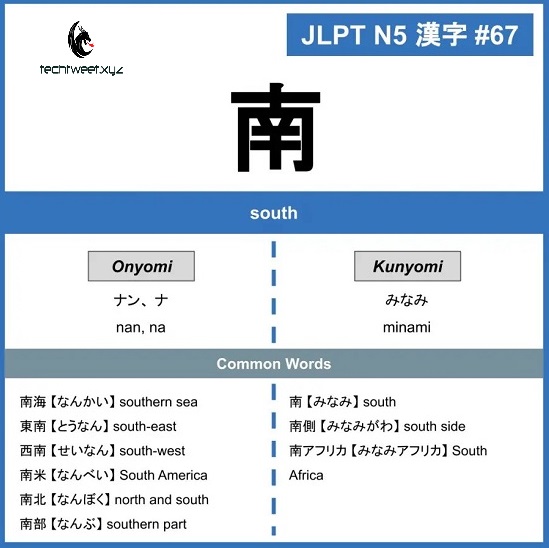
南
South
nan
なん
minami
みなみ
南 (south)
南 (みなみ, minami) means “south” in Japanese.
Kanji
English Meaning
Onyomi
Onyomi (Hiragana)
Kunyomi
Kunyomi (Hiragana)
JLPT N5 Vocab with Kanji
JLPT N5 Vocab with Kanji (Hiragana)
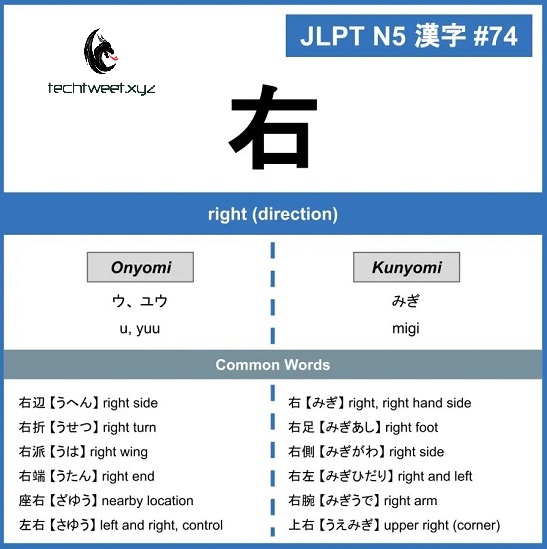
右
Right
yuu
ゆう
migi
みぎ
右 (right)
The kanji 右 (pronounced みぎ, “migi”) means right
左
Left
sa
さ
hidari
ひだり
左 (left)
The kanji 左 (pronounced ひだり, hidari) means “left”, as in the opposite of right.
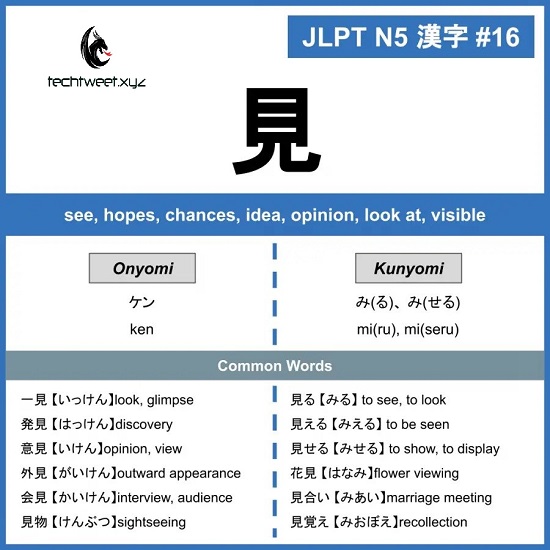
見
To see, to be visible, to show
ken
けん
mi(ru)
みる
見せる (to show)
The verb 見せる (pronounced みせる, miseru) means to show in Japanese.
Kanji
English Meaning
Onyomi
Onyomi (Hiragana)
Kunyomi
Kunyomi (Hiragana)
JLPT N5 Vocab with Kanji
JLPT N5 Vocab with Kanji (Hiragana)
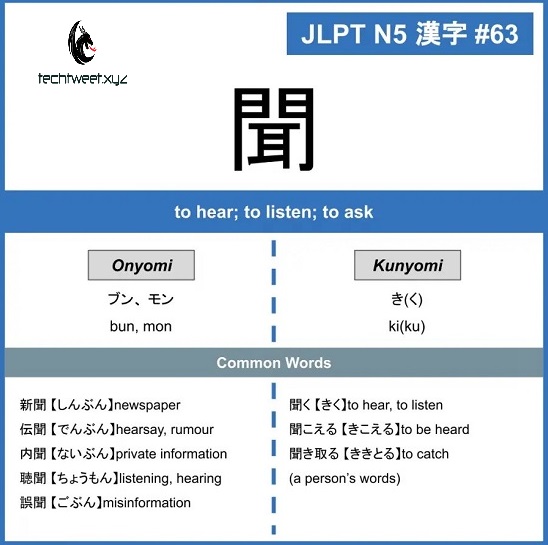
聞
To hear, to listen, to ask
mon, bun
もん, ぶん
ki(ku)
き(く)
聞く (to listen, to hear)
The verb 聞く (kiku) means “to listen” or “to hear” in Japanese.
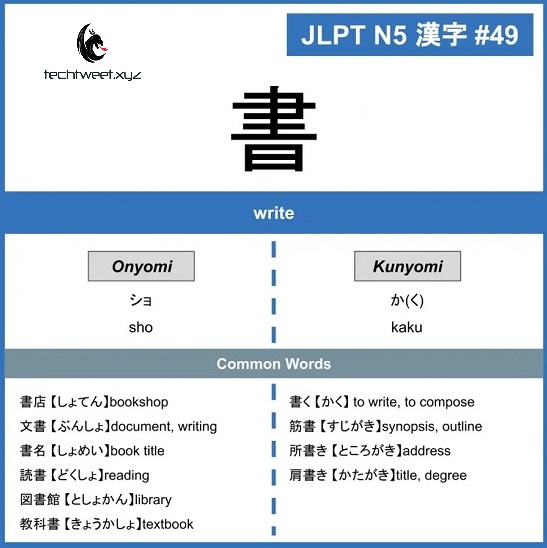
書
To write
sho
しょ
ka(ku)
か(く)
辞書 (dictionary)
The word 辞書 (じしょ, jisho) means “dictionary” in Japanese.
読
To read
doku
どく
yo(mu)
よ(む)
読む (to read)
The verb 読む (よむ, yomu) means “to read” in Japanese.
Kanji
English Meaning
Onyomi
Onyomi (Hiragana)
Kunyomi
Kunyomi (Hiragana)
JLPT N5 Vocab with Kanji
JLPT N5 Vocab with Kanji (Hiragana)
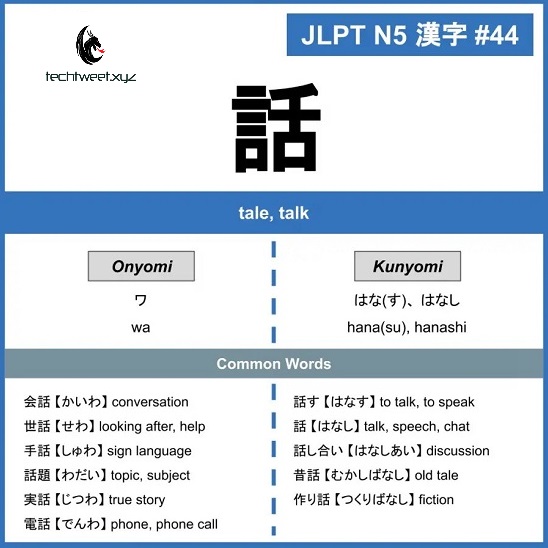
話
To talk, conversation
wa
わ
hanashi, hana(su)
はなし, はな(す)
電話 (telephone)
The word 電話 (でんわ, denwa) means “telephone” in Japanese.
買
To buy
bai
ばい
ka(u)
か(う)
買い物 (shopping)
The Japanese word for shopping is 買い物 (かいもの, kaimono).
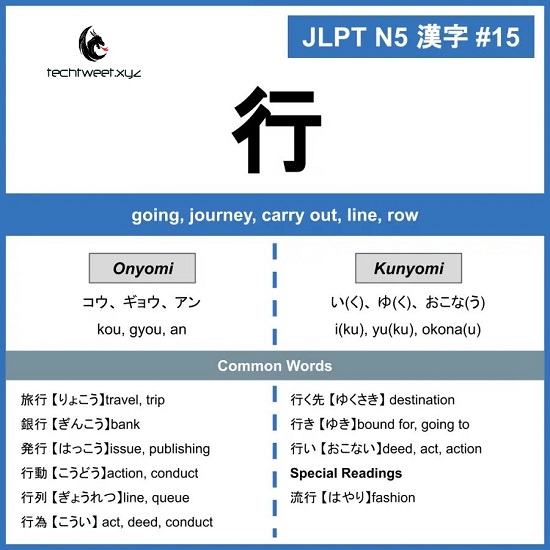
行
To go, to carry out
kou
こう
i(ku), okona(u)
いく, おこなう
銀行 (bank)
The Japanese word for bank is 銀行 (ぎんこう, ginkō).
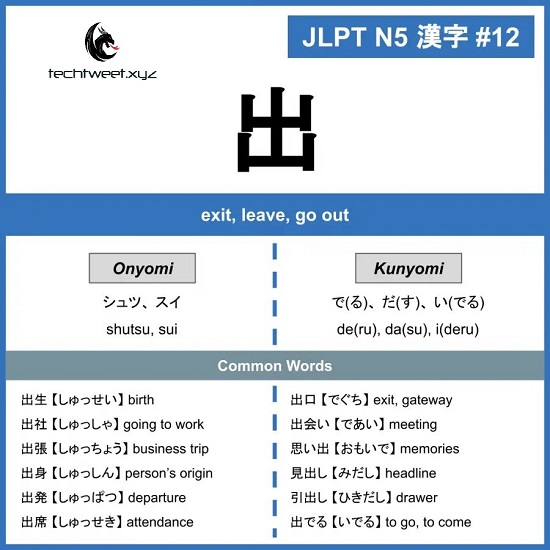
出
To go out, to leave
shutsu
しゅつ
de(ru), da(su)
でる, だす
出かける (to go out)
The Japanese word 出かける (でかける, dekakeru) means “to go out,”
Kanji
English Meaning
Onyomi
Onyomi (Hiragana)
Kunyomi
Kunyomi (Hiragana)
JLPT N5 Vocab with Kanji
JLPT N5 Vocab with Kanji (Hiragana)
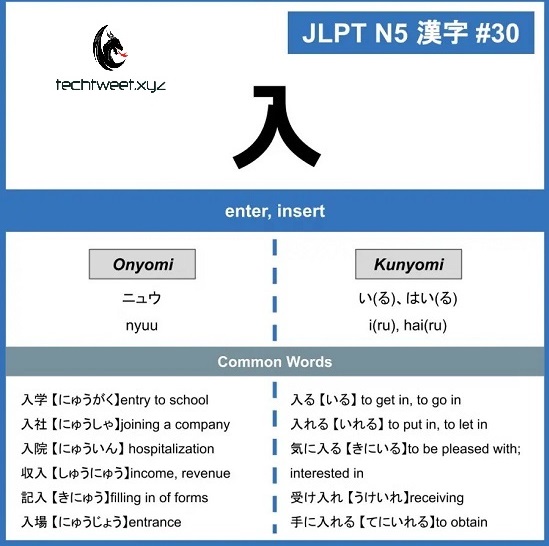
入
To enter, to put in
nyuu
にゅう
hai(ru), i(reru)
はいる, いれる
入口 (entrance)
The Japanese word for entrance is 入口 (いりぐち, iriguchi).
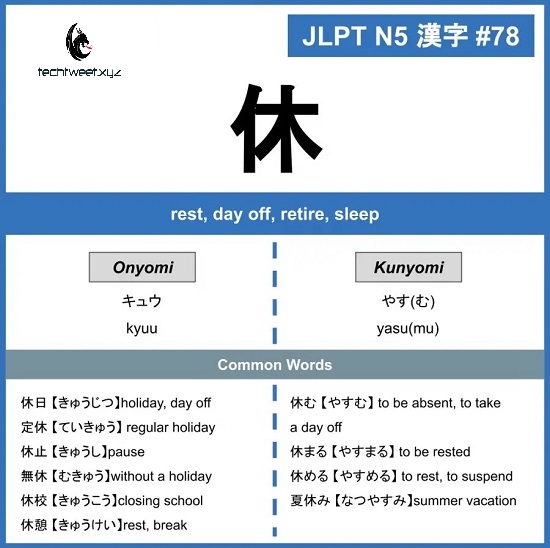
休
To rest, break, holiday, vacation
kyuu
きゅう
yasu(mu), yasu(mi)
やす(む), やす(み)
休む (to take a day off)
The Japanese word 休む (やすむ, yasumu) means “to rest,” “to take a break,” or “to take a day off.”
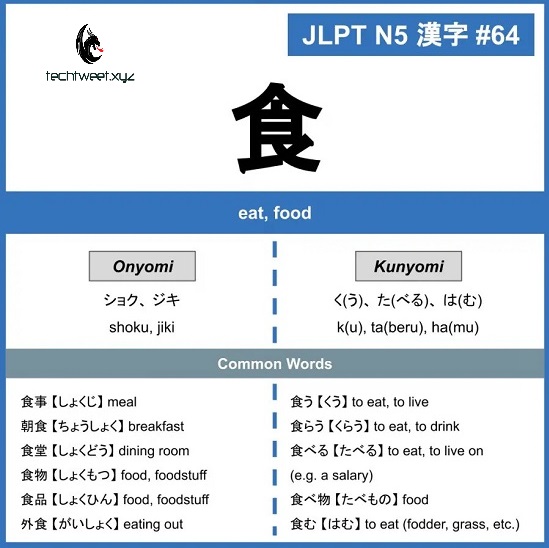
食
To eat, food
shoku
しょく
ta(beru)
たべる
食堂 (dining room)
The Japanese word 食堂 (しょくどう, shokudou) means “dining room” or “cafeteria.”
飲
To drink, a drink
in
no(mu)
のむ
飲み物 (beverage)
The Japanese word 飲み物 (のみもの, nomimono) means “beverage” or “drink.”
Kanji
English Meaning
Onyomi
Onyomi (Hiragana)
Kunyomi
Kunyomi (Hiragana)
JLPT N5 Vocab with Kanji
JLPT N5 Vocab with Kanji (Hiragana)
言
To talk, word
gen, gon
げん, ごん
i(u)
いう
言う (to say)
The Japanese word 言う (いう, iu) means “to say” or “to tell.”
立
To stand
ritsu
りつ
ta(tsu)
たつ
立つ (to stand)
The Japanese word 立つ (たつ, tatsu) means “to stand.”
会
To meet, society
kai, e
かい, え
a(u)
あう
会社 (company)
The word 会社 (kaisha) means “company” or “corporation” in Japanese.
多
A lot, many
ta
た
oo(i)
おい
多い (many), 多分 (probably)
The Japanese words 多い (おおい, ooi) and 多分 (たぶん, tabun) are both related to quantity or probability.
Kanji
English Meaning
Onyomi
Onyomi (Hiragana)
Kunyomi
Kunyomi (Hiragana)
JLPT N5 Vocab with Kanji
JLPT N5 Vocab with Kanji (Hiragana)
少
A little, few
shou
しょう
suko(shi), suku(nai)
すこし, すくない
少ない (few)
The word 少ない (sukunai) means “few” or “scarce” in Japanese and is written in hiragana as: すくない
古
Old
ko
こ
furu(i)
ふるい
古い (old)
The word 古い (furui) means “old” and is generally used to describe objects
新
New
shin
しん
atara(shii)
あたらしい
新しい (new), 新聞 (newspaper)
Here’s a breakdown of 新しい (atarashii, “new”) and 新聞 (shinbun, “newspaper”)
Kanji
English Meaning
Onyomi
Onyomi (Hiragana)
Kunyomi
Kunyomi (Hiragana)
JLPT N5 Vocab with Kanji
JLPT N5 Vocab with Kanji (Hiragana)
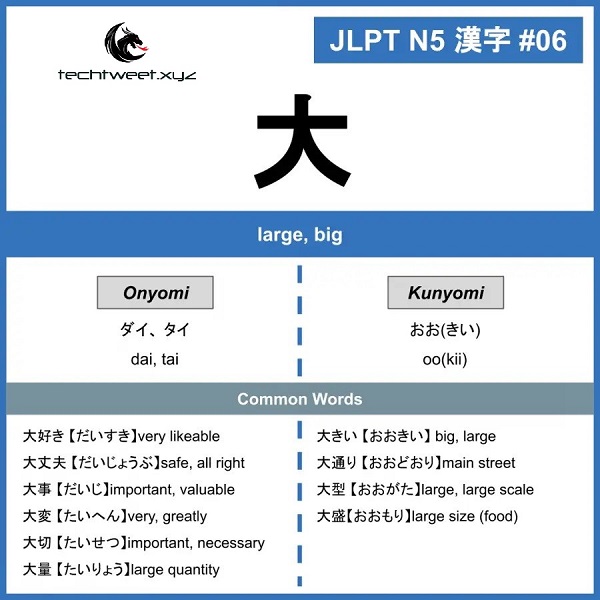
大
Big, a lot
dai, tai
だい, たい
oo(kii)
おおきい
大きい (big), 大変 (dreadful, immense)
Here’s a breakdown of the words 大きい (ōkii – “big”) and 大変 (taihen – “dreadful, immense”)
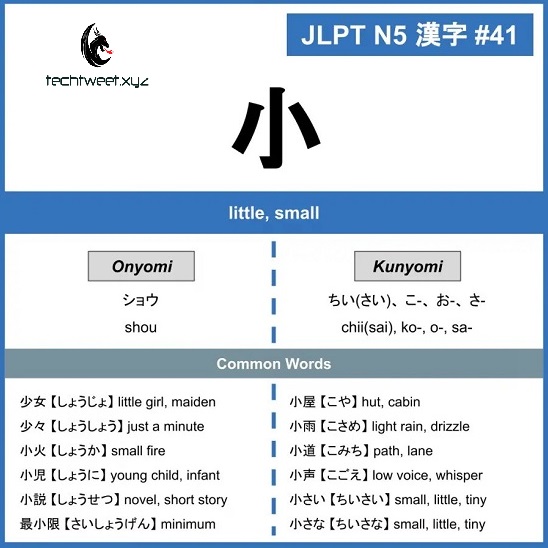
小
Little, small
shou
しょう
chii(sai), ko
ちいさい
小さい (little)
The word 小さい (chiisai), meaning “small” or “little,” is written in hiragana as: ちいさい
安
Cheap, safety, peace
an
あん
yasu(i)
やすい
安い (cheap)
The word 安い (yasui), meaning “cheap” or “inexpensive,” is written in hiragana as: やすい
Kanji
English Meaning
Onyomi
Onyomi (Hiragana)
Kunyomi
Kunyomi (Hiragana)
JLPT N5 Vocab with Kanji
JLPT N5 Vocab with Kanji (Hiragana)
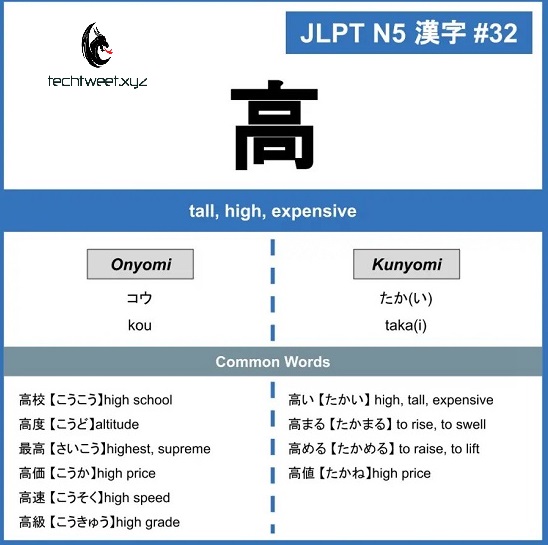
高
Expensive, high
kou
こう
taka(i)
たかい
高い (expensive)
Yes, 高い (たかい, takai) means “expensive” in Japanese
I have profession and personal attachment with custom ERP Software development, Business Analysis, Project Management and Implementation almost (36) ,also Oracle Apex is my all-time favorite platform to developed the software. Moreover i have some website development experience with WordPress. For hand on networking experience DevOps and CCNA, it create me a full package. Here are some core programming language with networking course i have been worked: Oracle SQL ,PL/SQL,Oracle 19c Database , Oracle Apex 20.1,WordPress,Asp.Net ,MS SQL ,CCNA ,Dev Ops, SAP SD